Photo
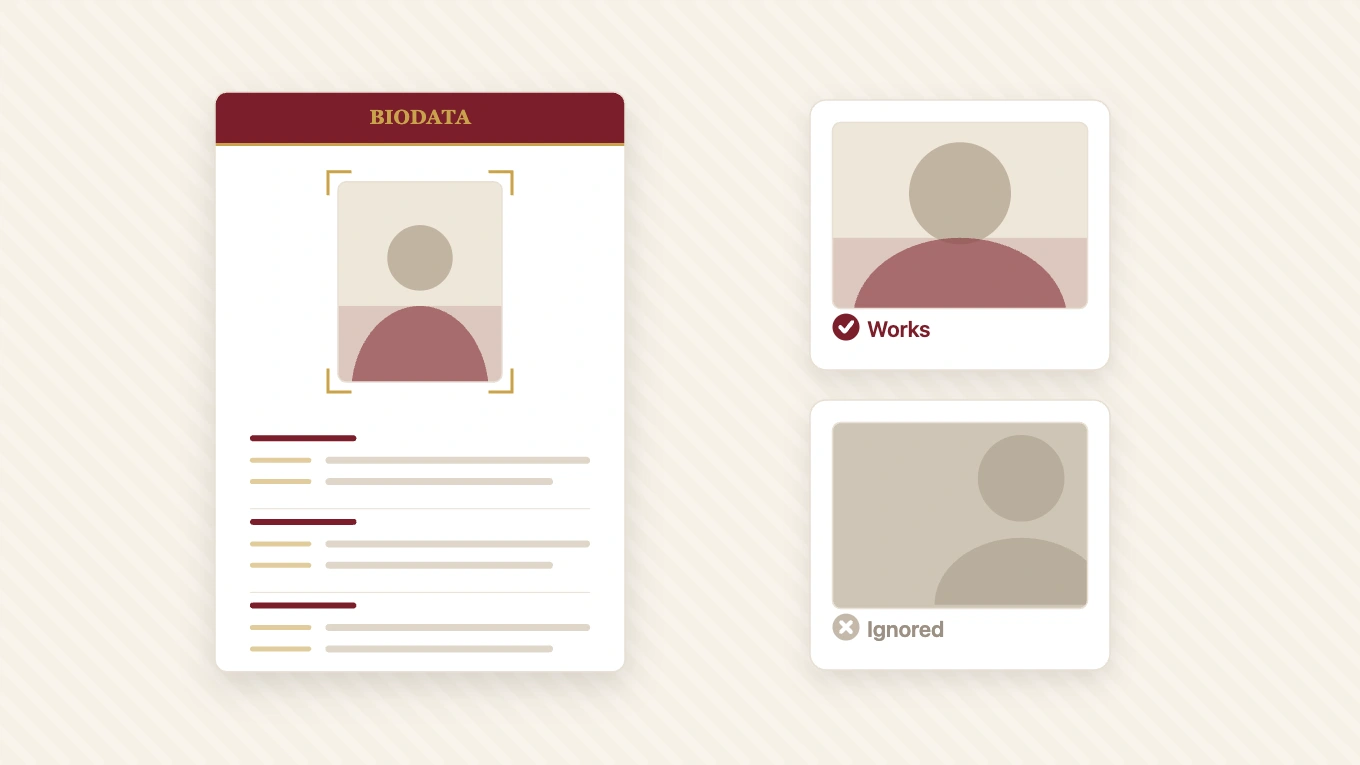
The biodata photo: what works and what gets ignored
Families look at the photo before they read a single line of a biodata. A clear, recent, well-lit photo gets the rest read. You do not need a studio — a phone, a window and five minutes are enough.
- One recent photo, shoulders-up, plain background.
- Daylight from a window beats any filter.
- Traditional or formal dress both work — choose what you are comfortable in.
- Never crop a face out of a group photo.
Why the photo matters so much
A biodata is read in under a minute, usually as one of many forwarded into a family group. The photo is what makes someone stop scrolling. A dark, blurry or years-old photo does not just look careless — it quietly suggests something is being hidden, and the biodata is skipped.
The five-minute setup at home
- Light: stand facing a window during the day. The light should fall on your face, not come from behind you.
- Background: a plain wall — white, cream or a soft colour. Move away from beds, cupboards and clutter.
- Camera: use the rear camera, not the selfie camera, held at eye level by someone else.
- Distance: an arm’s length and a bit; frame from mid-chest up.
- Expression: look at the camera with a natural, relaxed smile. Take ten shots and pick the one that looks most like you.
What to wear
Both traditional and formal clothes work. A saree, salwar suit or kurta suits most families; a formal shirt or a simple top is equally fine for many. Choose solid colours over busy prints, and avoid colours that match the wall. Keep jewellery and make-up the way you would for a family function — not a wedding.
Crop and size
Crop to shoulders-up with a little space above the head. A portrait (vertical) photo fits almost every biodata design. Do not stretch or squash it to fit a frame — crop it instead. Most biodata apps let you crop inside the app so the face sits in the centre of the frame.
What to avoid
| Avoid | Why |
|---|---|
| Sunglasses, caps, face masks | Families want to see your face clearly |
| Beauty filters and heavy editing | If you look different in person, trust is hard to rebuild |
| Faces cropped from group photos | Low resolution and an odd crop |
| Photos older than a year | Same trust problem as filters |
| Dark rooms, backlight, night photos | Grainy and unflattering |
| Mirror selfies and gym photos | Read as casual for a family introduction |
One photo or several?
One photo on the biodata itself is enough. If a family asks for more, send one or two extra photos separately — a full-length photo is the usual request. Keeping extras out of the biodata keeps the page clean and stops personal photos being forwarded widely.
Want it designed?
Make it in the app in a minute — 19 designs, 13 languages, a print-ready PDF.
Last updated 16 September 2026 · Biodata for Marriage team
Frequently asked questions
Which photo is best for a marriage biodata?
Should I wear traditional dress in a biodata photo?
Can I use a studio photo?
Make your biodata in the next 10 minutes
Free to start. Classic Frame in all 13 languages, no sign-up.
Get the free app